#5onFri: Five Bits of Writing Advice (that Actually Work!)

As writers, I’m sure we’ve all heard our fair share of colorful writing advice from famous authors. From the controversial “Write drunk, edit sober” (frequently attributed to Ernest Hemingway, but actually sourced from a novel by Peter de Vries) to the unorthodox suggestion of “Get a cat” (one of my personal favorites, courtesy of Muriel… Read more »

archetypes

Character Archetypes: The Survivor and the Protector

Hey there word nerds! For the past several articles, we’ve discussed the concept of a Storytelling Superpower, and how we all can find ours. The secret is the heart of every story–the character. There are four main character archetypes, and discovering which one resonates more with you can help you unlock your own storytelling superpower…. Read more »

archetypes

Character Archetypes: The Disruptor and the Underdog

Hey word nerds! We’re continuing my series on your Storytelling Superpower today by digging into the first two of four character archetypes. But first a quick recap: In my first post, we talked about how character, more than plot, world or any other story element, drives a story forward. If your reader doesn’t care about… Read more »

protagonist

The Secret to Creating an Irresistible Protagonist

In my last post, we discussed how a protagonist is the driving force behind every story. And there are four distinct types of protagonists, and different writers are drawn to different ones. They all exist on a spectrum, between what a character wants and his or her personality. Which do you gravitate towards? Let’s take… Read more »

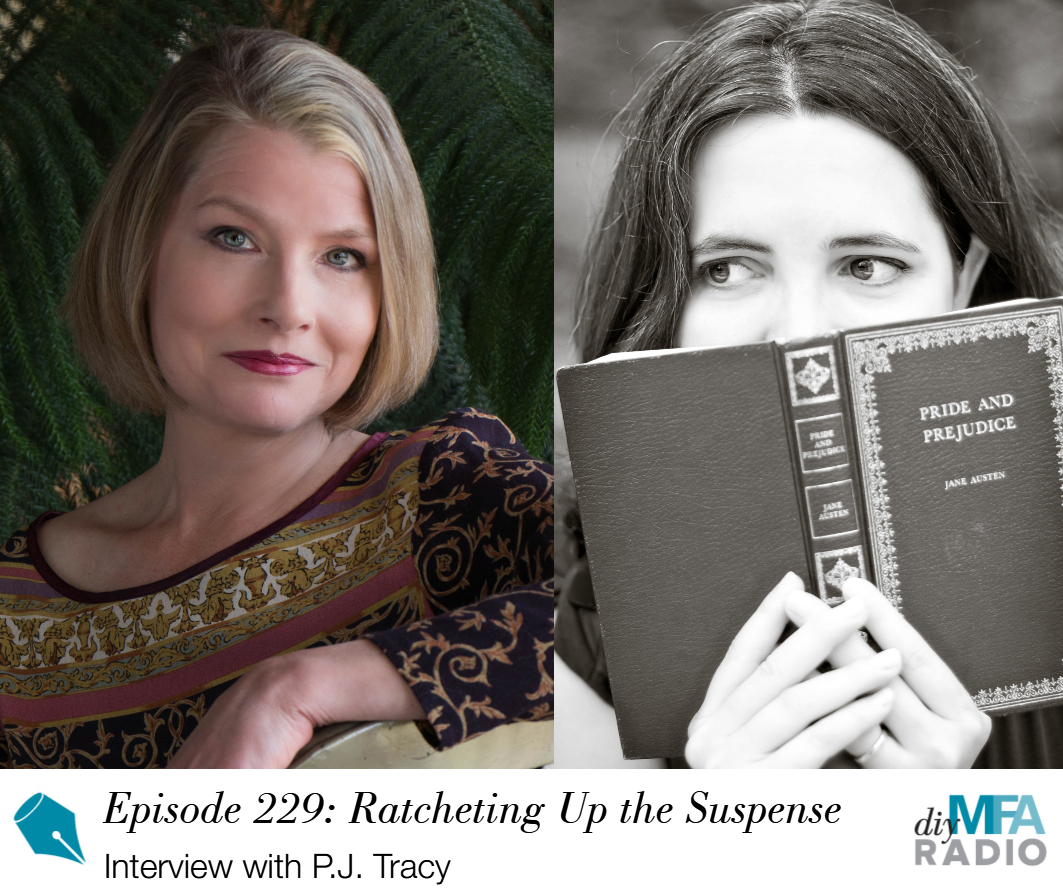
Episode 229: Ratcheting Up the Suspense — Interview with P.J. Tracy

Hey there word nerds! Today I have the pleasure of speaking with Traci Lambrecht, of the mother-daughter writing team P.J. Tracy, perhaps most well-known for their Monkeewrench thriller series. Traci spent most of her childhood riding and showing horses, then graduated with a Russian Studies major from St. Olaf College in Minnesota. She then began… Read more »

The Opposite is Possible Theory of Character Development

Here’s a secret writing exercise I only recently learned: If you want characters to feel real for the reader, you have to hint they have the potential to be the opposite of what they appear. Wait, what? The opposite of what the character seems . . . wouldn’t that mean the character is acting out… Read more »