Untraditional Outline Techniques

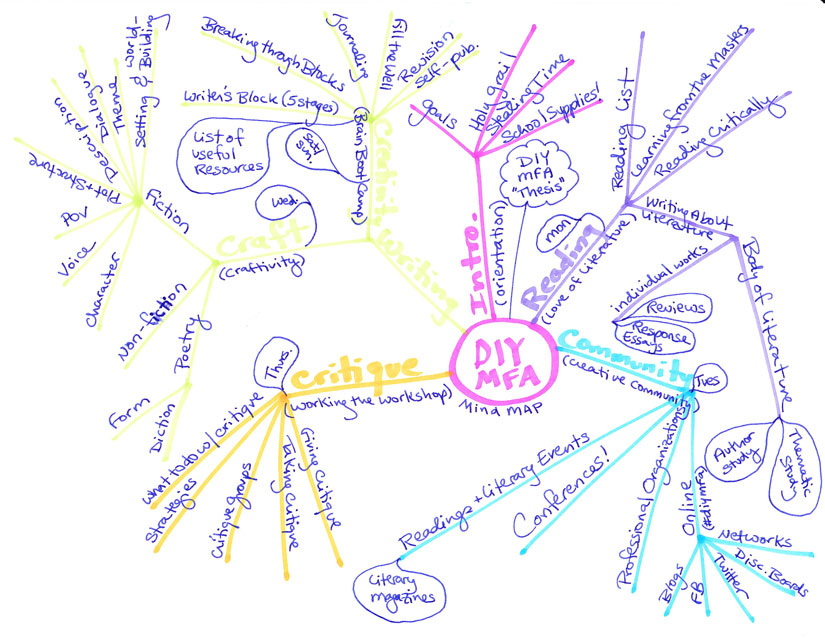
This past week we’ve been talking about outlines.  On Monday I asked the question: Plotter or Pantser? Where Do You Stand?  That post got me thinking about my own writing process. I’m usually not a seat-of-my-pants writer but I hate traditional outlines.  Something about long lists (I.A, 2.b–it’s all Greek to me) just doesn’t work… Read more »

How to Create a Story Map

One of my favorite ways to outline or plan a story is to map it out like a subway or road map.  Here’s how this technique works. Each road or subway line represents a different story-thread or plot line.  The dots (exits on the highways or subway stops) represent different scenes or moments in the… Read more »

Plotter or Pantser: Where Do You Stand?

Plotter: n. (1) A writer who plots out his or her story in the greatest of detail before starting the draft; (2) a writer obsessed with outlines, index cards and writing apps; (3) a writer who spends most of his or her time organizing the novel then writes it in about ten minutes. Pantser: n…. Read more »

Why Moms Matter in YA and Children’s Literature

The first thing you learn when writing for children and teens is that you have to get rid of the parents.  With parents or other adults around, the kids don’t have as many opportunities to go on adventures or get into trouble.  The easiest way to solve this problem is to kill off (or otherwise… Read more »

5 Archetypes for Supporting Characters

Before we get to the discussion of character archetypes, I’d like to make a request: please strike the term “secondary character” from your vocabulary.  Not only does it imply that somehow these characters are less important than the protagonist, but the term itself doesn’t tell us much about the role these characters play in the… Read more »

Villains vs. Antagonists

Every story needs a “bad guy,” someone or something that gets in the protagonist’s way and keeps making trouble for him or her.  For instance if my life were a novel, the “bad guy” would be an impossibly cute 3-year-old ginger cat, whose offenses include: “Decorating” the living room with shredded articles of mail Skulking… Read more »

Short Fiction Suggested Reading

I struggled to come up with a perfect suggested reading list for this month’s Master Class on Short Fiction, but I kept finding myself hitting the wall.  Some of you may have heard me lament the absence in the world of a perfect short story anthology .  I’ve found ones that are OK but never… Read more »

Why Short Stories Matter: Guest Post by Emma Komlos-Hrobsky

Emma Komlos-Hrobsky was one of my very first friends at the MFA program I attended.  We served on the staff of the Writing Program literary magazine (LIT) together and I could tell right away from her comments while evaluating submissions that Emma had an eye for awesome fiction.  We both graduated in 2010 and Emma… Read more »

What is a Verse Novel?

What makes something a verse novel?  Simply speaking, a verse novel (or novel in verse) is exactly what the name implies: a novel that is told in verse rather than prose. It’s a bit more complicated than that, though.  Why aren’t works like Homer’s Iliad and Odyssey and Virgil’s Aeneid called epic poems and not… Read more »